
FROM CRITICISM TO CONCRETE RESULTS:INSIDE KANO’S ONGOING DEVELOPMENT SHIFT
By Najeeb Nasir Ibrahim
In every democracy, criticism is inevitable. Leaders operate under constant scrutiny, facing opposition, debate, and at times intense hostility. Yet beyond the political noise lies a more enduring benchmark of leadership performance. History ultimately judges governments not by the volume of criticism they attract, but by the measurable impact of their policies on citizens’ lives.
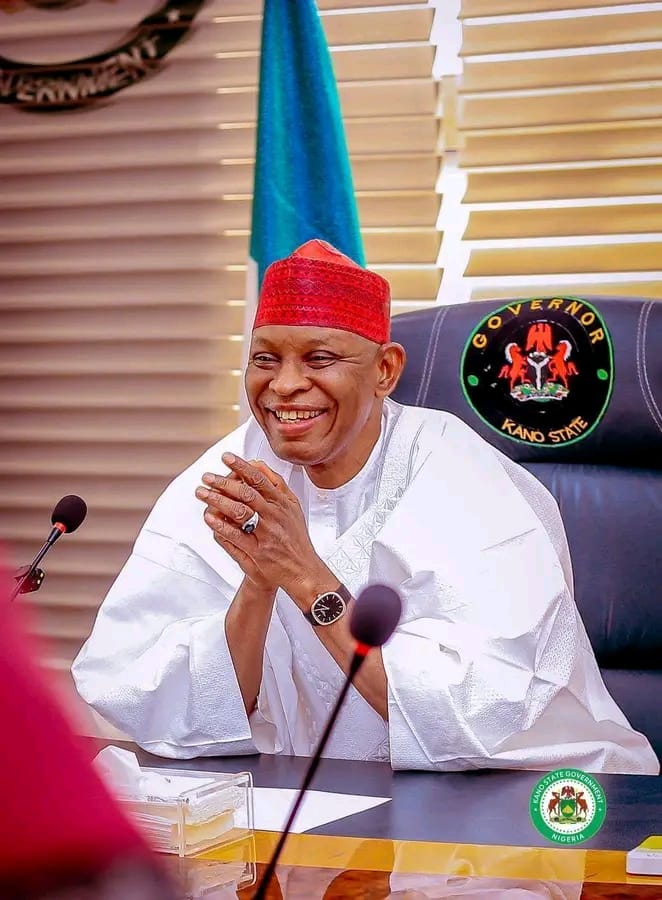
In Kano State, the administration of Abba Kabir Yusuf offers an instructive example of governance anchored on visible outcomes. Across the state capital, the physical landscape is undergoing noticeable change, driven largely by infrastructure renewal and urban rehabilitation initiatives.
Road reconstruction and expansion projects are among the most visible indicators of this shift. For a city that serves as one of Northern Nigeria’s major commercial nerve centers, improved transport networks carry implications far beyond convenience. Efficient roads lower the cost of moving goods, support small and medium-scale enterprises, enhance mobility, and contribute to urban security. Infrastructure, in this context, is not merely a development symbol; it is a driver of economic vitality.
Urban renewal also shapes perception. Cities compete — for investment, talent, and regional relevance. Visitors arriving through Mallam Aminu Kano International Airport increasingly encounter a metropolis in transition, a factor that reinforces confidence in the state’s growth trajectory.
Equally significant is the administration’s focus on environmental management. The renewed attention to sanitation, including the provision of waste disposal facilities and public cleanliness campaigns, reflects a recognition that sustainable development requires behavioral change. Cleaner streets and organized waste systems improve public health outcomes while fostering a culture of shared civic responsibility.
These interventions may appear modest in isolation, but collectively they signal an important governance approach: development that combines physical infrastructure with social orientation. Changing public habits is often more challenging than constructing roads, yet it is essential for lasting progress.
Underlying these initiatives is a governance philosophy that appears centered on local priorities and visible impact. Whether described informally as a “people-first” approach or simply pragmatic policymaking, the emphasis remains on delivery. The administration’s actions suggest a deliberate attempt to align policy with everyday realities mobility, sanitation, and urban functionality.
This does not imply the absence of challenges. No administration operates without gaps or areas requiring improvement. However, the pace of implementation and the visibility of projects have made governance performance a central topic of public discourse, even among skeptics. The conversation, increasingly, is shifting from whether change is occurring to how it can be sustained and expanded.
Criticism, in this sense, plays a vital democratic role. Constructive opposition strengthens accountability and refines policy direction. Yet effective criticism must be grounded in objective assessment, acknowledging progress while interrogating shortcomings. Balanced discourse ultimately benefits both government and citizens by focusing attention on outcomes rather than rhetoric.
Kano’s importance extends beyond its borders. Historically and economically, the state has long functioned as a strategic hub for Northern Nigeria. Its development trajectory influences regional trade patterns, urbanization trends, and political momentum. Sustained progress in infrastructure and civic management could therefore reinforce Kano’s position not only as a commercial center but also as a reference point for subnational governance.
The enduring challenge will be institutionalization. For reforms to outlast political cycles, they must be embedded in systems — planning frameworks, maintenance cultures, and transparent oversight mechanisms. Development that becomes routine rather than exceptional is what ultimately transforms societies.
Governance is a continuous process, measured over time. While public debate may fluctuate with political currents, tangible outcomes remain the most reliable indicators of leadership effectiveness. Roads built, cities maintained, public services improved, and citizens empowered — these are the metrics that define legacy.
In Kano today, observable developments suggest an administration intent on translating policy into visible change. The responsibility ahead lies in consolidating these gains, strengthening transparency, and ensuring inclusiveness so that progress reaches every segment of society.


