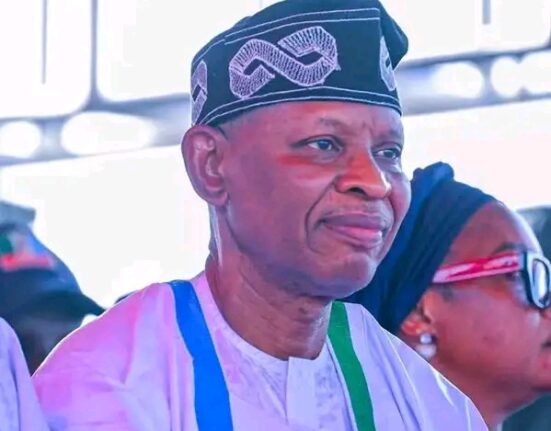

The Ethics of Governance: Is Kano’s Deputy Governor Prioritizing Party Over People?
By Mohammed Babagana Abubakar
Email: aunodigitalabuba@gmail.com
March 14, 2027
The empty chair at the 38th Kano State Executive Council meeting on March 12 was more than just a vacant seat, it was a loud statement of administrative defiance. As Governor Abba Kabir Yusuf presided over the affairs of the state, the conspicuous absence of the Deputy Governor, Comr. Aminu Abdussalam Gwarzo, sent a chilling signal to the people of Kano,the machinery of government is being held hostage by political friction.
Under the Constitution of the Federal Republic of Nigeria, the office of the Deputy Governor is not a decorative title. It is a functional component of the Executive. When a Deputy Governor who also oversees the vital Ministry of Higher Education deliberately boycotts the highest decision-making body of the state, it transcends politics. It becomes a dereliction of duty.
Section 188 of the Constitution defines (gross misconduct) as a grave violation or breach of the provisions of the Constitution. By failing to attend official engagements designed to move the state forward, the Deputy Governor is effectively abandoning the mandate given to him by the electorate.
Perhaps the most damaging aspect of this standoff is the Deputy Governor’s refusal to relinquish his role as Commissioner for Higher Education.
Administrative Stagnation, education is the bedrock of Kano’s development. If the Commissioner is not on speaking terms with the Governor (the head of the cabinet), how can budgets be approved? How can policies be implemented?
The Honorable Path, several commissioners, recognizing the shift in political alignment following the Governor’s move to the APC, chose the path of honor and resigned. By staying in office while working at cross purposes with the administration, the Deputy Governor creates a clog in the wheel of progress.
The lingering question for the people of Kano is simple.Who does Gwarzo serve? If the interest of the state were truly at heart, the Deputy Governor would understand that a house divided against itself cannot stand. Governance requires synergy. His continued stay in office, despite a fundamental disagreement with the executive direction, suggests a preference for the perks of power over the productivity of the state.
Political commentators are right to suggest that the Kano State House of Assembly must now look at the legalities of this impasse. Impeachment is often viewed as a political nuclear option, but in this case, it may be the only surgical tool available to prevent total governance paralysis. A state as large and complex as Kano cannot afford an administrative vacuum. If a Deputy Governor is no longer willing to assist the Governor in the discharge of his functions, the constitutional remedy is clear.
Kano State stands at a crossroads. The people deserve a government that is united in its pursuit of development, not one fractured by partisan loyalty. Comr. Aminu Abdussalam Gwarzo must decide, either align with the current administration to serve the people, or honorably step aside. To do neither is a disservice to the millions of citizens whose lives depend on a functional government.