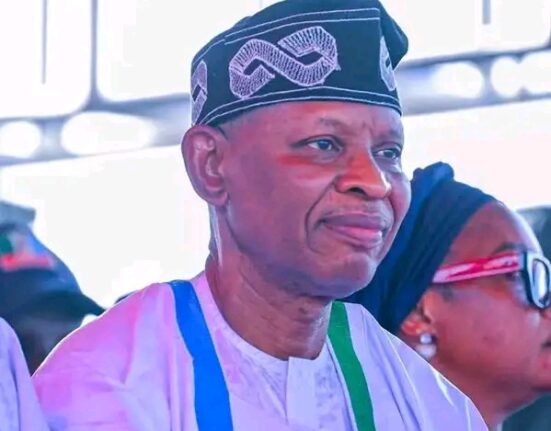

KWANKWASO’S INCLUSIVITY INSENSITIVITY AND THE LIMITS OF REGIONAL POLITICS
By: Nworisa Michael
There are conversations people have quietly, and there are conversations they avoid publicly. This is one of them. For years, Sen. Rabiu Musa Kwankwaso has remained a dominant political force in Kano. His structure is strong, his base is loyal, and his influence within that core is undeniable. But beyond that strength lies a question that is rarely addressed openly one that speaks to the limits of that same influence. The question of inclusivity.
In a state like Kano, with its long history as a commercial hub attracting people from across Nigeria, politics cannot thrive on a narrow base alone.
Kano is not just a cultural center; it is a convergence point home to what many refer to as non-indigenous communities, though I prefer the term intertribe communities people who have lived, worked, and built their lives within the state for decades. These communities are not outsiders. They are part of Kano’s economic and social fabric.
Yet, over time, there has been a persistent perception among many within these communities that they are not fully carried along within Kwankwaso’s political vision. Whether through past policy directions, administrative decisions, or the broader tone of engagement, a sense of distance has developed. This perception did not emerge overnight.
During previous administrations, certain decisions particularly around public sector restructuring were widely interpreted in some quarters as disproportionately affecting non-indigenous workers. In many conversations across Sabon Gari and similar communities, these moments are often referenced, not always loudly, but consistently. And in politics, consistency of perception matters.
Because political strength is not just about how deeply you are loved by your base, but how widely you are accepted beyond it. This is where the limitation begins to show. A movement that does not intentionally integrate diverse communities within its structure may struggle to build organic expansion. Instead of producing advocates across regions, it risks creating pockets of indifference and in some cases, quiet resistance. The implication is clear: regional dominance, no matter how strong, cannot easily translate into national influence without inclusivity.
Nigeria’s political terrain is too diverse for that.
Leadership at scale requires more than loyalty; it requires accommodation. It requires building bridges across identities, ensuring that different groups do not just coexist within a system, but see themselves reflected in it. And this is where the gap becomes significant.
If, over the years, stronger efforts had been made to deliberately include and empower these intertribe communities within the broader political movement, the story today might have been different. These communities could have become natural ambassadors voices that carry influence beyond Kano, extending into other parts of the country where similar demographics exist. Instead, what we often see is silence where there could have been advocacy. And sometimes, silence in politics speaks louder than opposition.
This is not to dismiss the achievements or the enduring relevance of Sen. Rabiu Musa Kwankwaso. Far from it. His political journey remains one of the most significant in Northern Nigeria. But significance alone does not guarantee expansion. Adaptation does.
The future of any political figure seeking broader relevance lies in recognizing these gaps and addressing them deliberately. Inclusivity is no longer optional it is strategic. It is the bridge between regional strength and national viability. Kano itself tells this story every day. A city built on diversity cannot be politically sustained on selective engagement.
And perhaps that is the quiet lesson here: That the limits of regional politics are not defined by how strong a base is, but by how wide its embrace can become.
Nworisa Michael is the coordinator of Inter-tribe Community Support Forum and writes from nworisamichael1917@gmail.com