


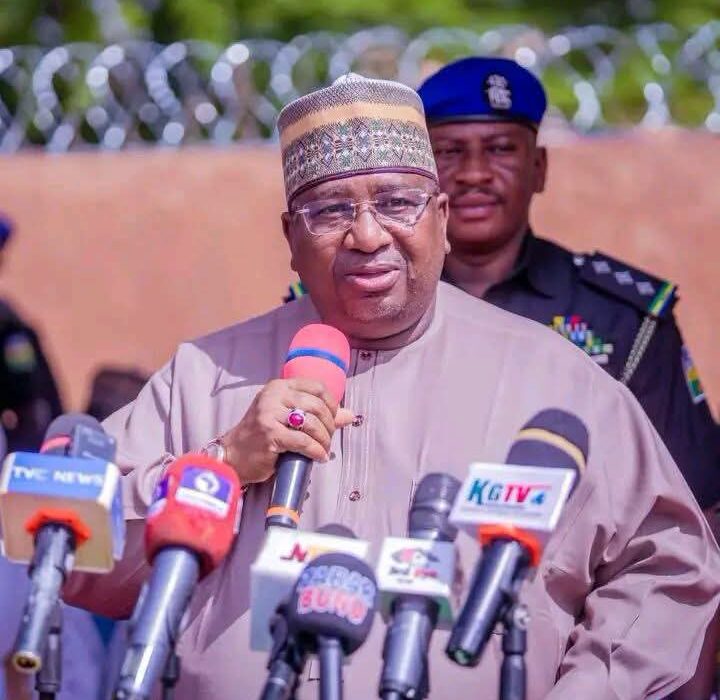
Kebbi at 35: Building on Legacy, Shaping a New Future of Development
By Ibrahim Abubakar Jombali
Special Adviser on Public Enlightenment and Orientation to the Executive Governor of Kebbi State
Kebbi State, the Land of Equity, is 35.
Thirty-five years is long enough for a state to have established a history, institutions and a distinct identity, yet young enough to remain a work in progress. It is mature enough to assess the contributions of its leaders, while still youthful enough to dream of becoming greater than its present reality.
Created on August 27, 1991, from the former Sokoto State, Kebbi was entrusted with the challenging task of building a new political and administrative identity. What emerged was more than another administrative unit on Nigeria’s map. It became a community united by history, culture, commerce and a shared determination to achieve progress.
As Kebbi marks its 35th anniversary, the occasion deserves more than ceremonial speeches and anniversary celebrations. It provides an opportunity to reflect honestly on the state’s journey, acknowledge the contributions of those who laid its foundations, assess the present, and look confidently towards the future.
A Journey Built on Cumulative Leadership
The history of Kebbi is fundamentally a story of cumulative leadership. No state is built within a single electoral cycle. Development is a relay in which each administration inherits what came before, builds upon it and leaves something for the next generation.
The founding generation inherited the enormous responsibility of transforming a newly created state from an administrative idea into a functioning government.
Major General Patrick Aziza, the pioneer administrator, undertook the difficult task of establishing the machinery of statehood. Ministries and government institutions had to be created, the civil service organised and Birnin Kebbi developed as the centre of administration.
These foundational responsibilities may not always attract public applause, but they were indispensable. Without them, the achievements of subsequent administrations would not have been possible.
The administrations that followed also played their respective roles in strengthening the young state.
Abubakar Musa, Kebbi’s first civilian governor, marked the beginning of democratic participation in the affairs of the state. The administrations of Salihu Tunde Bello, John Ubah and Samaila Bature Chamah further contributed to the process of institutional consolidation and continuity.
Their contributions demonstrate an important truth about governance: not every administration will be defined by monumental projects. Some contribute by strengthening institutions, maintaining stability and creating the conditions upon which future development can be built.
Kebbi’s early leaders therefore deserve recognition for helping establish the foundations upon which the state has continued to grow.
Democratic Consolidation
The return to democratic governance in 1999 opened another important chapter in Kebbi’s history.
The election of Muhammadu Adamu Aliero provided the state with an administration that enjoyed the opportunity to pursue longer-term development planning. His eight-year tenure brought continuity and allowed the government to move beyond the immediate challenges of state formation towards broader development objectives.
Saidu Usman Nasamu Dakingari subsequently continued the development trajectory, inheriting a state that had become increasingly established institutionally and was seeking to expand public services and infrastructure.
His administration also contributed significantly to rural infrastructure development, extending development beyond the major urban centres and into communities across the state.
These successive administrations helped demonstrate that Kebbi’s progress was not the product of a single political moment but the outcome of an evolving process.
From Agriculture to a Broader Development Identity
For much of its history, Kebbi has been identified nationally with agriculture. Its fertile land, hardworking farmers and agricultural potential have remained central to its economic identity.
Under former Governor Atiku Bagudu, agriculture received renewed attention as a major component of the state’s development strategy. The sector became not only an economic activity but an important part of Kebbi’s public identity and its relationship with the wider Nigerian economy.
Successful states do not merely administer territory; they develop reputations and identities.
Kebbi has built an identity around agriculture, resilience, enterprise and a rich cultural heritage. Today, that identity is being complemented by a growing emphasis on infrastructure, urban development, human capital and modern public services.
Governor Nasir Idris and the New Face of Kebbi
Every governor inherits challenges peculiar to his time.
For Governor Comrade Dr. Nasir Idris, Kauran Gwandu, one of the defining challenges has been how to make development more visible and tangible to citizens.
Policies and institutional reforms may sometimes be difficult for ordinary citizens to immediately see. Roads, bridges, hospitals, schools, secretariats and urban renewal projects, however, provide visible evidence of government intervention.
Under Governor Idris, Kebbi has embarked on an ambitious programme of infrastructure development that is rapidly changing the physical appearance of the state.
The significance of this transformation should neither be underestimated nor overlooked.
In developing societies, infrastructure remains one of the clearest expressions of governmental commitment. It demonstrates confidence, communicates ambition and shows citizens that government is investing not only in the present but also in the future.
The new state secretariat, expanding township roads, strategic highways, hospital modernisation, rural development initiatives, human capital investments and urban renewal projects collectively represent an attempt to give Kebbi a more contemporary identity.
They are helping to create a new face of progress and development.
A state that wants to compete economically must first be properly connected.
Farmers need roads.
Traders need roads.
Students need roads.
Patients need roads.
Investors need roads.
Infrastructure is sometimes dismissed as merely physical development. In reality, it is economic policy expressed through concrete, asphalt and public facilities.
This explains why the current administration’s emphasis on roads, bridges and public infrastructure extends beyond the projects themselves. These investments are reshaping how Kebbi functions, how its people connect with one another and how the state is perceived by outsiders.
Investing in People
Physical infrastructure alone cannot create a prosperous society.
The development of education, healthcare and human capital remains equally important because people are the ultimate drivers of sustainable development.
The administration of Governor Nasir Idris has therefore placed emphasis not only on physical transformation but also on human development. These investments provide the foundation upon which the state’s future prosperity must be built.
At 35, Kebbi possesses advantages that many younger states are still working to establish. It has a stable political identity, a nationally recognised agricultural profile, functioning institutions, expanding urban centres and an increasingly ambitious development agenda.
Most importantly, it has a leadership history that demonstrates that governance is a relay rather than a sprint.
A Legacy Shared by Many
Kebbi’s journey can be viewed through the contributions of its successive leaders:
Aziza established.
Musa consolidated.
The succeeding administrators strengthened.
Aliero democratised and expanded the foundations of democratic governance.
Dakingari continued the development process.
Bagudu expanded the state’s agricultural and development profile.
Idris is giving Kebbi a new physical identity.
Each chapter is incomplete without the others.
That may be the most important lesson of Kebbi’s 35 years: development is rarely the achievement of one leader. It is the accumulation of policies, institutions, sacrifices and contributions made by successive administrations and millions of citizens.
The farmer in Argungu.
The trader in Yauri.
The teacher in Jega.
The civil servant in Birnin Kebbi.
The entrepreneur in Zuru.
The student preparing for a future that has not yet been fully imagined.
All of them are authors of the Kebbi story.
Their contributions may not appear in official records, but they remain essential to the state’s progress.
Looking Towards the Future
As Kebbi enters its 36th year, the question is no longer whether the state can develop. The evidence of its progress suggests that it can.
The greater question is how far it can go.
Kebbi has the resources, human capital, agricultural potential, institutional foundation and determination to become an even stronger centre of economic and social development.
Thirty-five years ago, it was a newly created state searching for an identity, direction and the means to fulfil the aspirations of its founding fathers.
Today, it is increasingly confident in its purpose, proud of its history and determined to shape its future.
That is no small achievement.
Kebbi has earned the right to celebrate.
Thirty-five years of statehood.
Thirty-five years of institution-building.
Thirty-five years of leadership.
Thirty-five years of resilience, sacrifice and an eventful journey towards greatness.
Indeed, Kebbi is great.
And perhaps, more importantly, the state is now entering one of the most consequential chapters of its history.
Governor Nasir Idris deserves recognition for providing a vision centred on visible transformation, infrastructure development and human capital. His determination to give Kebbi a new physical identity offers renewed confidence that the state’s best years may still lie ahead.
The journey continues.
The dream remains alive.
And the Land of Equity is moving forward.
Happy 35th Anniversary, Kebbi State.
Thirty-five years of history.
Thirty-five years of progress.
Thirty-five years of building.
And a future full of greater possibilities.
For enquiry, advertisement, announcement or single call 08036614747


