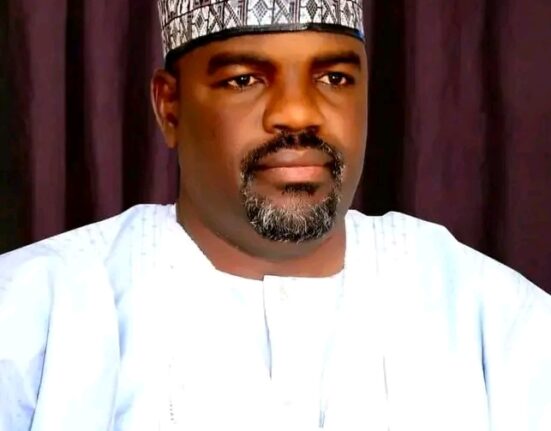


From Occupation to Transformation: Why Capacity Trumps Presence
By Mohammed B. Abubakar
Unifier Project Coordinator, Kano State
In the lexicon of Kano State’s current administrative era, one name has become synonymous with the “Action-First” philosophy: Commander Abdullahi Ibrahim Waiya.
As we analyze the trajectory of our state’s development, it has become clear that the era of the “Office Occupant” the official who is physically present but functionally stagnant is over. In its place, we have seen the rise of the Capacity Commissioner, a role modeled and perfected by Commander Waiya.
1. The “Command-and-Collaborate” Framework
Commander Waiya’s success stems from a unique leadership framework. He does not just give orders; he builds the capacity of those around him to execute them. This is the hallmark of a true Unifier.
Discipline as a Foundation: His military background ensures that deadlines are not suggestions, and public resources are treated with the highest level of integrity.
Decentralized Problem Solving: Unlike “office occupants” who micro-manage or ignore issues, Waiya empowers his team, ensuring the commission functions effectively even when he is in the field.
2. Breaking the “Glass Wall” of Bureaucracy
An office occupant is often shielded from the public by a “glass wall” of assistants and red tape. Commander Waiya has shattered this wall. His tenure is marked by:
Direct Accessibility: Engaging with the grassroots to understand how policies affect the common man in Kano.
Rapid Response: Issues that previously took months to navigate through the civil service are now addressed with “military precision,” cutting down wait times and increasing public trust.
3. The Unifier Synergy
As the Unifier Project Coordinator, I have seen firsthand how his capacity-driven approach aligns perfectly with our mission. A “Unifier” doesn’t just bring people together; they bring results together. By focusing on capacity over mere occupancy, Commander Waiya has turned his office into a hub of innovation.
> “The chair in an office is meant for rest; the floor of the office is meant for work. Commander Waiya understands that a leader’s legacy is written on the streets of the state, not on the stationery of his desk.”
> The Verdict
The experience of having a man of capacity like Commander Abdullahi Ibrahim Waiya is not just “better” than having a mere office occupant it is a necessity for a state in transition. He has proven that leadership is a verb, not a noun. He is not just a Commissioner; he is a catalyst for the Kano we all envision.