Nigeria Has Passed Through ‘Red Sea’, Now Entering Age Of Prosperity
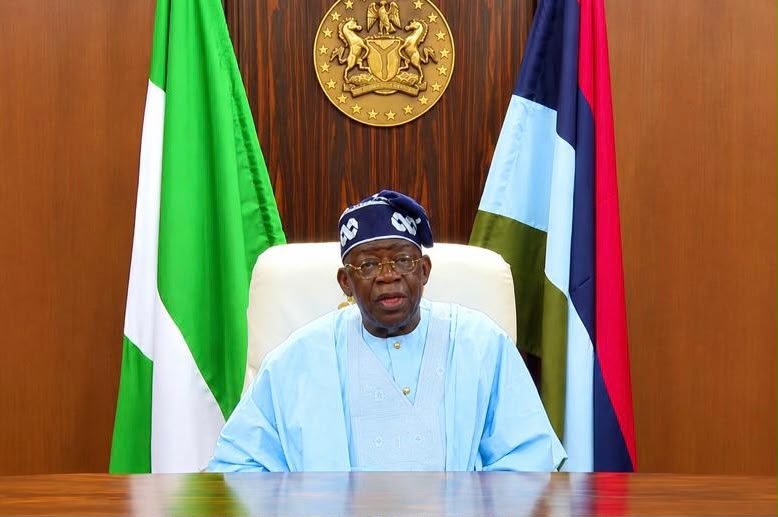
President Bola Ahmed Tinubu has declared that Nigeria has moved beyond the difficult phase of economic reforms and is now entering what he described as an “age of prosperity.” Tinubu made the declaration in his Independence Day address marking Nigeria’s 66th anniversary.
Speaking to Nigerians, Bola Tinubu reflected on the country’s 66-year journey, acknowledging the challenges of war, military rule, economic crises, insecurity and political upheaval that have shaped the nation since independence.
The President paid tribute to ordinary Nigerians whose resilience continues to sustain the country, including farmers, traders, teachers, entrepreneurs and workers, as well as members of the Armed Forces and security services who risk their lives in the service of the nation.
Tinubu said Nigeria’s independence was about more than gaining sovereignty, arguing that the founding fathers envisioned a nation where citizens would have the freedom and opportunity to shape their destiny and enjoy a better quality of life.
According to the President, Nigeria faced severe economic challenges by 2023, making difficult reforms necessary. He compared the country’s economic situation to a patient battling cancer who must undergo painful treatment to recover.
Bola Tinubu defended the reforms implemented by his administration, saying they were designed to confront longstanding economic weaknesses rather than create them. He acknowledged that the measures brought real difficulties and side effects for Nigerians.
The President said the reforms had begun to produce measurable improvements, citing economic growth of more than four per cent, contributions from both the oil and non-oil sectors, lower oil theft and a decline in inflation from its peak.
Tinubu also pointed to improved foreign reserves, greater stability in the foreign exchange market and record non-oil export revenue exceeding $6 billion in 2025 as indicators of what he described as Nigeria’s improving economic outlook.
He declared that the country had reached a turning point, saying the immediate task of correcting Nigeria’s economic direction had given way to a broader objective of delivering shared and widespread prosperity.
According to Bola Tinubu, prosperity must translate into tangible improvements in the lives of Nigerians rather than remain limited to economic statistics.
He described it as a Nigeria where farmers can work safely, businesses can access credit and young people can find productive employment.
The President said reducing the cost of living remains a priority, with his administration focusing on lowering the cost of producing and transporting food and other essential goods through agricultural investment, infrastructure and improved connectivity.
Tinubu said the government would expand mechanised irrigation and dry season farming, improve access to seeds and fertiliser, strengthen agricultural mechanisation, and invest in storage and transportation to reduce losses between farms and markets.
He also announced continued efforts to promote industrialisation by using Nigeria’s gas resources to power industries, reviving factories, expanding digital connectivity and providing Nigerian businesses with infrastructure, finance and skills needed for growth.
The President placed job creation and enterprise development at the centre of his economic agenda, particularly for young Nigerians entering the workforce. He said Nigeria’s youthful population should become an engine of production and innovation.
Tinubu acknowledged that millions of Nigerians continue to face difficulties with food, education, healthcare and transportation.
He said these challenges were the accumulated result of decades of low productivity, inadequate infrastructure and limited opportunities.
He said the government would strengthen social support programmes for vulnerable citizens, improve the National Social Register and expand initiatives such as the Nigerian Education Loan Fund and CREDICORP to provide opportunities and financial support.
The President also highlighted continued investment in primary healthcare, basic education and other essential public services, while stating that salaries and pensions had been paid on time and in full since 2023.
Bola Tinubu declared that the government’s objective was not simply to manage poverty but to defeat it, stressing that achieving this would require sustained economic growth, discipline and the creation of millions of productive opportunities.
Concluding his Independence Day address, Tinubu said “Nigeria has corrected its course” and urged Nigerians to move forward without looking back.
He described the nation’s destination as a Nigeria of abundance and opportunity, where prosperity is widely shared and every child can dream beyond the circumstances of birth.