

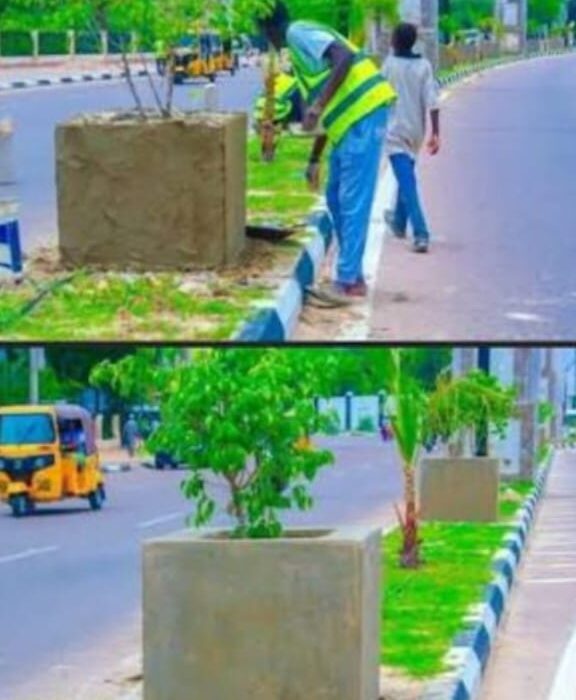
In the evolving story of infrastructural renewal in Kano,
The administration of Abba Kabir Yusuf has continued to attract public attention for its ambitious road construction and rehabilitation projects across the state. From major urban corridors to community access roads, many citizens acknowledge that visible progress is being made in repositioning the state’s transport infrastructure.

Road infrastructure is not merely about asphalt and concrete; it is about economic mobility, urban efficiency, and social connectivity. In a commercial hub like Kano, where daily economic activities depend heavily on seamless transportation, the rehabilitation and construction of roads directly influence productivity, security, and overall quality of life. The administration’s efforts in opening up new roads and reconstructing dilapidated ones reflect a broader vision of building a “New Kano” — a city that aligns with modern urban standards while preserving its commercial strength.
While appreciating these achievements, it is also important to draw attention to a critical traffic corridor that deserves urgent intervention: Lawal Danbazau Road, stretching from the NNPC filling station through Skyline University and linking to Zoo Road, popularly known as “Titin Gidan IG.”
This particular route serves as a strategic alternative link within the metropolitan area. Due to increasing vehicular movement around Zoo Road and adjoining commercial zones, congestion has become a persistent challenge. Upgrading and expanding Lawal Danbazau Road would significantly ease traffic pressure, improve travel time, and enhance safety for commuters, students, and business operators within that axis. Its proximity to educational institutions, residential neighborhoods, and commercial outlets makes it a key artery deserving prioritized attention.
A deeper analysis of ongoing infrastructural development across the state shows that the present administration is not merely executing projects but attempting a broader transformation. The rehabilitation of roads across different local government areas demonstrates a commitment to inclusive development rather than concentrating improvements only in select districts. This balanced approach strengthens public trust and reinforces the principle that governance must benefit all.
However, sustainable urban planning requires anticipating future growth. The Skyline–Zoo Road corridor is rapidly expanding in both population density and commercial activity. Addressing traffic congestion proactively will prevent long-term gridlock and reduce the economic cost of delays. Strategic expansion, proper drainage systems, pedestrian walkways, and improved traffic management along Lawal Danbazau Road would perfectly align with the administration’s infrastructural vision.
As concerned citizens committed to good governance, it is both fair and responsible to commend visible strides while respectfully urging attention to emerging needs. The transformation agenda is clearly in motion. By incorporating key strategic routes like Lawal Danbazau Road into the next phase of development, the administration can further solidify its legacy in the journey toward building a modern, efficient, and economically vibrant Kano.
Written by Najeeb Nasir Ibrahim


