
Building the Foundations of a Modern Kano: Inside the Development Drive of the Abba Kabir Yusuf Administration
By Munir I. Publisher
7th March, 2026
In the evolving story of governance in Kano State, an important questions continues to surface in public discourse: who truly shapes the narrative of development in a modern administration? Is it only the elected leader who announces policies, or also the voices that interpret, communicate, and translate those policies into a vision citizens can understand and embrace? When a government embarks on an ambitious agenda across housing, rural electrification, education, infrastructure, and urban planning, who ensures that these efforts are clearly articulated and meaningfully connected to the aspirations of the people?
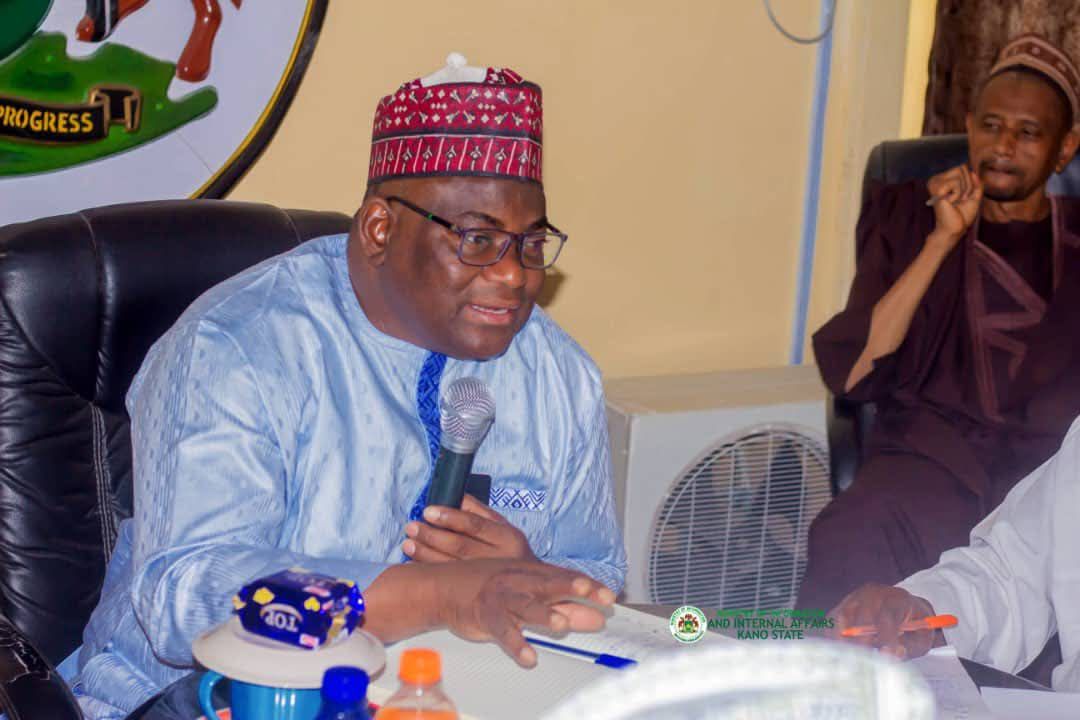
Within the administration of Governor Abba Kabir Yusuf, one figure increasingly associated with that responsibility is the Honourable Commissioner for Information and Internal Affairs, Ibrahim Abdullahi Waiya. Beyond the routine duties of government communication, Waiya has emerged as a central voice explaining the philosophy and priorities behind the administration’s development agenda.
Through regular policy briefings, civic engagement, and sustained interaction with the media, he has sought to translate government programmes into a broader narrative of public responsibility and collective development. In political and civic conversations across Kano, this role has earned him a widely referenced description, “Limamin Kano First,” a phrase used to capture his position as one of the leading advocates of the governance philosophy associated with the administration.
Across several sectors, the policies and initiatives highlighted by the Kano State Government reflect an effort to respond to both immediate developmental needs and long-standing structural challenges within the state.
Housing as a Pillar of Social Development
Access to decent housing remains one of the most persistent challenges facing many Nigerian states. Rapid population growth, urban migration, and economic pressures have widened the gap between housing demand and supply, particularly in fast-growing urban centres.
Recognizing this reality, the Kano State Government has introduced a housing initiative designed to bring development closer to local communities. One aspect of the programme involves the allocation of 50 housing units across the state’s rural 36 local government areas, an effort aimed at decentralizing housing development rather than concentrating it solely within the metropolitan centre.
Although modest in scale relative to Kano’s large population, the policy represents an important attempt to ensure that smaller communities are not excluded from development planning. By distributing housing units across local governments, the administration is seeking to promote balanced growth while addressing housing needs beyond the urban core.
For many communities that have historically received limited attention in housing policy, such decentralization reflects a growing recognition that development must reach every layer of society.
Expanding Access to Electricity in Rural Communities
Electricity remains a critical driver of economic and social progress. Across Nigeria, unreliable power supply continues to constrain productivity, limit business expansion, and affect the quality of life in rural communities.
In response to this challenge, the Kano State Government has undertaken an initiative to distribute nearly 500 electricity transformers to rural communities across the state. The intervention is intended to strengthen electricity distribution networks and improve power access in areas where supply has traditionally been unstable or insufficient.
For rural communities, improved electricity access can produce transformative outcomes. It enables small-scale enterprises to operate more efficiently, supports agro-processing activities, and improves living standards for households.
Reliable electricity also plays an important role in expanding educational opportunities and access to digital technologies, both of which are increasingly essential in today’s knowledge-driven economy.
Strengthening the Foundations of Education
Education remains one of the most important investments any government can make in securing the future of its society. Yet in many rural parts of Kano, inadequate classroom infrastructure and limited teaching facilities have posed serious challenges to effective learning.
To address these gaps, the state government has embarked on the construction of two blocks of classrooms in several rural communities, particularly in areas where school infrastructure has struggled to keep pace with population growth.
Beyond the construction of classrooms, the administration has also emphasized increasing school enrolment and expanding the provision of teaching facilities. These efforts are aimed at improving the learning environment while encouraging more children to participate in the education system.
Educational infrastructure may not always attract the same level of attention as large-scale construction projects, but its long-term impact on society is often far more significant. By strengthening school facilities and expanding access to education, the government is investing in the human capital that will ultimately shape the state’s economic and social future.
Improving Rural Connectivity Through Feeder Roads
Infrastructure development often plays a decisive role in linking communities to economic opportunities. In largely agrarian states like Kano, the condition of rural roads can significantly influence farmers’ ability to transport their produce to markets.
Recognizing this connection, the Kano State Government has initiated projects involving feeder roads designed to connect rural communities with larger commercial centres. Such roads help reduce transportation costs, facilitate trade, and improve access to essential services such as healthcare and education.
For farmers and traders in rural areas, improved road networks can make the difference between profitable agricultural production and economic stagnation.
By prioritizing feeder roads, the administration is addressing a critical dimension of rural development that directly affects livelihoods and economic mobility.
Managing Urban Growth Through Strategic Planning
While rural development remains a key focus, the administration has also turned its attention to the challenges of urban expansion. Kano’s rapidly growing population has placed increasing pressure on housing, transportation networks, and public infrastructure.
To address these pressures, the government has announced plans for the development of three major urban layouts within the state. These layouts are intended to provide organized residential and commercial spaces capable of accommodating population growth while ensuring that infrastructure development follows a coordinated and sustainable plan.
Urban planning is essential for preventing the uncontrolled expansion that often leads to congestion, inadequate drainage systems, and insufficient public services. By introducing new layouts, the government hopes to guide the future growth of Kano in a more structured and sustainable direction.
Revisiting a Historic Master Plan
Perhaps one of the most ambitious elements of the administration’s development agenda is the decision to review the Kano State Master Plan, a comprehensive planning framework that has reportedly remained largely dormant since the 1960s.
Urban master plans serve as long-term blueprints for managing land use, transportation systems, housing development, and environmental sustainability. When such plans fall into neglect, cities often experience unplanned growth that strains infrastructure and public services.
By revisiting the master plan, the Kano State Government aims to restore a strategic planning framework capable of guiding urban development for decades to come.
For a historic commercial centre like Kano, whose economic and demographic influence extends far beyond the state itself, such long-term planning could prove critical in maintaining its role as one of northern Nigeria’s most important urban hubs.
Communicating the Vision
No development agenda can succeed without effective communication. Policies must be clearly understood by citizens if they are to gain public support and participation.
This responsibility has largely fallen to the Ministry of Information and Internal Affairs under the leadership of Ibrahim Abdullahi Waiya. Through media engagements, policy briefings, and public dialogue, Waiya has consistently framed these initiatives within the broader philosophy of Kano First, an approach that emphasizes prioritizing the collective interests of the state above partisan divisions.
His role as the administration’s chief communicator has positioned him at the centre of the public conversation surrounding these initiatives, helping to ensure that the government’s development priorities are clearly explained and widely understood
The Real Test of Governance
Ultimately, the success of these initiatives will not be measured by policy announcements alone but by their practical impact on the lives of citizens.
Housing programmes must translate into homes for families. Electricity transformers must deliver reliable power. Classrooms must improve learning outcomes. Roads must strengthen economic activity. Urban planning must produce cities that are organized, livable, and prepared for the future.
For the administration of Governor Abba Kabir Yusuf, the initiatives currently unfolding across Kano represent an effort to address both immediate development needs and long-standing structural challenges.
If sustained with consistency, transparency, and public engagement, these efforts could contribute to shaping a governance model that moves beyond short-term politics toward a more comprehensive vision of development, one that seeks not only to build infrastructure but also to lay the institutional foundations of a modern and resilient Kano.
For inquiries, advertisements, jingles, or publication services, please contact: 08036614747.


