Champion of Kano: Safeguarding the Corridor Programme and the Kano First Agenda
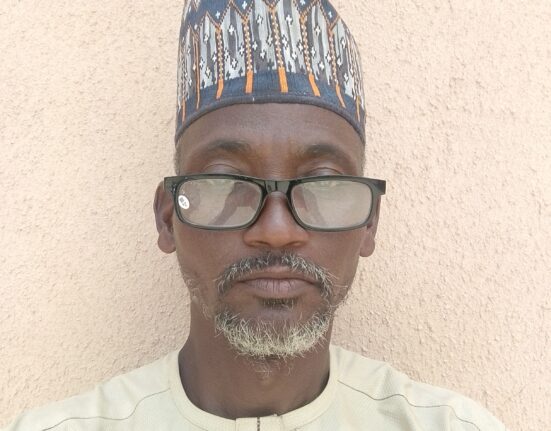
A Deep Political and Governance Analysis of Ibrahim Abdullahi Waiya
In contemporary governance, the success of any administration depends not only on policies and projects but also on the strength of those entrusted with shaping public perception and defending the vision of government. Within the administration of Abba Kabir Yusuf, one figure increasingly stands out as a central communicator and ideological defender of the government’s developmental philosophy — Comrade Ibrahim Abdullahi Waiya, the Commissioner for Information and Internal Affairs.
In many respects, Waiya has emerged as a champion of the Kano First Agenda and a strategic defender of the government’s reform corridor — a framework that seeks to align governance, development priorities, and public communication around the interests of Kano State.
The Strategic Role of Information in Governance
In democratic governance, the Ministry of Information functions as the intellectual and communication engine of government. It shapes narratives, communicates policies, counters misinformation, and maintains the link between leadership and the people.
As Commissioner for Information and Internal Affairs, Waiya occupies the position of Chief Public Communicator of the State, responsible for ensuring that government policies and reforms are accurately understood by citizens.
He has consistently emphasized transparency, accountability, and ethical communication as pillars of the administration’s public engagement strategy.
Under his stewardship, the ministry has focused on:
Disseminating government policies and achievements
Strengthening professional standards in broadcasting and media
Ensuring responsible political discourse
Promoting transparency in governance
These responsibilities place him at the center of protecting and projecting the Kano First philosophy.
Kano First Agenda: Ideology and Developmental Vision
The Kano First Agenda represents the governing philosophy of the Yusuf administration.
Its central principle is simple but powerful:
Every policy decision must prioritize the interests, development, and welfare of Kano State and its people.
This agenda seeks to:
Rebuild public institutions
Restore social trust in governance
Promote economic development
Strengthen transparency and accountability
Waiya’s role in this agenda is particularly important because policies alone cannot succeed without effective public communication and ideological clarity.
Through media engagement, public briefings, and stakeholder dialogues, he has been instrumental in explaining the purpose and direction of government reforms to the people.
Safeguarding the Governance Corridor
The phrase “saving the corridor programme” can be understood as protecting the strategic pathway through which the administration’s reforms move from policy to implementation.
This corridor includes:
Government policy formulation
Communication to citizens
Stakeholder engagement
. Media narrative management
Public accountability
Waiya’s work within this corridor has been visible in several areas:
Media Regulation and Professional Standards
He has pushed for higher professional standards in broadcasting and media practice in Kano.
His collaboration with the Society of Nigerian Broadcasters reflects a commitment to combating misinformation and strengthening ethical journalism.
Promotion of Responsible Political Dialogue
Waiya has also encouraged political actors to maintain respectful and constructive discourse in public debates.
This initiative aims to reduce political hostility and foster issue-based discussions.
Protecting Public Confidence
He has repeatedly defended the government against misleading narratives while encouraging journalists to uphold fairness and accuracy.
This effort is essential in maintaining public trust.
Political Courage and Loyalty to the Government’s Vision
Another dimension of Waiya’s leadership is political boldness.
He has demonstrated readiness to openly defend the administration’s direction, even in politically sensitive situations.
For example, during political tensions within the state government, he argued that government officials must align with the administration’s development agenda or step aside to avoid undermining governance.
This stance reinforces the idea that governance requires unity of purpose and ideological clarity.
Championing Public Engagement and Community Development
Beyond communication, Waiya has also supported grassroots initiatives and community associations aimed at improving welfare, youth empowerment, and social development in Kano.
Such engagements reflect a governance philosophy that sees development as a partnership between government and society.
The Political Symbolism of Waiya’s Emergence
Politically, Waiya represents a new generation of activist-politicians entering governance.
Before joining government, he was known for:
Civil society activism
Advocacy for social justice
Engagement in public discourse
His appointment therefore symbolizes a transition from activism to governance, where reform-minded individuals are given the opportunity to implement the ideas they once advocated.
This transformation strengthens the legitimacy of the Kano First agenda.
Challenges and the Road Ahead
Despite progress, several challenges remain:
Information Warfare
In modern politics, misinformation spreads rapidly through digital platforms.
Political Opposition
Opposition narratives can distort government reforms.
Public Expectations
Citizens expect rapid improvements in governance and service delivery.
Addressing these challenges requires consistent communication, transparency, and strategic messaging areas where Waiya’s role remains critical.
A Defender of Kano’s Political Direction
Comrade Ibrahim Abdullahi Waiya has gradually positioned himself as one of the key ideological defenders of the Kano First Agenda.
Through strategic communication, media engagement, and political advocacy, he has contributed to protecting the government’s reform corridor and ensuring that the administration’s vision remains clearly understood by the people.
In many respects, his role transcends that of a conventional information commissioner.
He functions as:
The voice of government policy
The defender of the administration’s narrative
A political communicator shaping the future direction of Kano
If the Kano First agenda continues to gain momentum, history may record Waiya not merely as a commissioner, but as one of the central champions who safeguarded and projected the ideological foundation of the administration.